Varicose veins are a common issue that can affect both comfort and confidence. While some people notice only visible veins, others experience swelling, aching, heaviness, itching, or tiredness in their legs. These symptoms can become more noticeable after a long day of standing, sitting, or walking.
For people looking for a simple way to manage these symptoms, compression stockings for varicose veins can be a useful option. They are designed to apply controlled pressure around the legs and support the normal movement of blood through the veins.
What Causes Varicose Veins?
Veins carry blood back toward the heart. In the legs, this process has to work against gravity. Small valves inside the veins help prevent blood from flowing backward.
When these valves become weak or don’t function properly, blood can collect in the veins. Increased pressure may cause the veins to become enlarged, twisted, and more visible beneath the skin.
Several factors can contribute to varicose veins, including genetics, age, pregnancy, prolonged standing, and other factors that affect circulation.
What Are Compression Stockings?
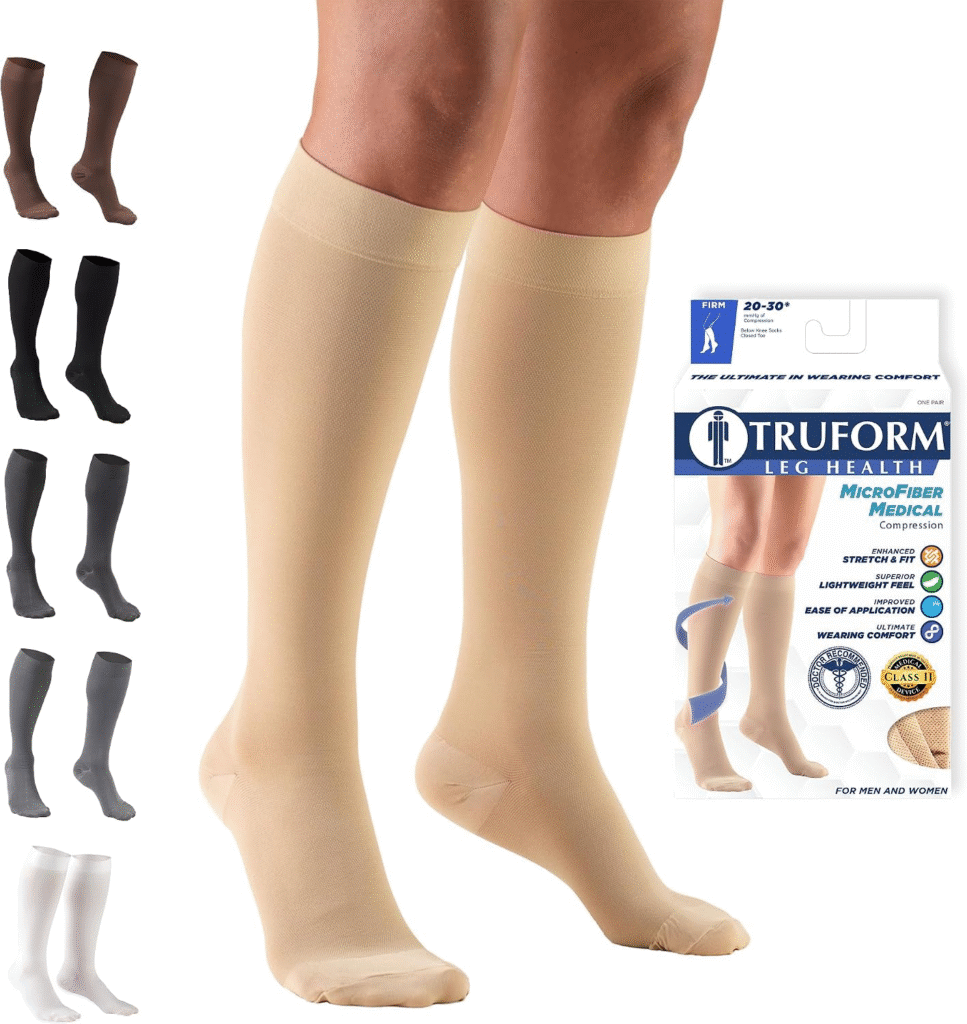
Compression stockings are specially manufactured garments that apply pressure to the legs. Unlike ordinary socks, they are designed to provide a specific level of compression.
Many medical compression stockings use a graduated design. This means they generally provide stronger pressure near the ankle and gradually reduce pressure farther up the leg.
The purpose is to provide external support that can encourage blood to move upward through the veins.
How Can They Help With Varicose Veins?
Compression stockings don’t remove varicose veins, but they may help manage some of the symptoms associated with them.
The pressure around the leg can support the veins and may help reduce the accumulation of fluid in the lower legs. As a result, some people experience less swelling and a reduced feeling of heaviness.
They may be particularly useful for people who experience discomfort after spending long periods on their feet.
Potential Benefits
Using properly fitted compression stockings may provide several practical benefits.
Reduced Swelling
Ankle and lower-leg swelling can become uncomfortable during the day. Compression may help manage this swelling in some people.
Less Leg Heaviness
Varicose veins can make the legs feel heavy or tired. Compression garments may provide a supportive sensation and improve comfort.
Better Daytime Comfort
People who work long shifts or sit for many hours may find compression stockings useful as part of their daily routine.
Support During Travel
Long periods of sitting can make the legs feel stiff and uncomfortable. Some travelers choose compression garments to provide additional leg support during extended journeys.
Choosing the Correct Compression Level
Compression stockings are commonly labeled using mmHg, which means millimeters of mercury. This measurement indicates how much pressure the stocking provides.
Different compression levels are designed for different needs. A lighter level may be used for general support, while stronger compression may be recommended for certain medical conditions.
Choosing the highest compression level isn’t automatically the best approach. If you have significant varicose veins or another circulation problem, ask a healthcare professional which level is appropriate.
How to Choose the Right Size
Sizing is essential for compression stockings.
The stocking should fit firmly against the leg without causing excessive pressure. A loose stocking may not provide the intended compression, while an incorrectly small stocking may be painful.
Manufacturers usually provide detailed sizing charts. These may require measurements around the ankle and calf, and sometimes the thigh and leg length.
Take your measurements carefully and compare them with the specific brand’s sizing instructions.
Knee-High or Thigh-High?
The right length depends on where compression is needed.
Knee-high stockings are often convenient for people whose symptoms primarily affect the lower legs.
Thigh-high stockings extend above the knee and provide compression over a larger portion of the leg.
Some people may require a longer compression garment based on their symptoms or professional recommendations.
How to Put Them On
Compression stockings are tighter than ordinary socks, so putting them on correctly can take some practice.
Morning is often a convenient time because swelling may be lower. Place the foot into the stocking first, ensuring the heel and toe are positioned correctly. Then gradually work the stocking upward.
Smooth out any wrinkles and distribute the fabric evenly.
Avoid rolling the stocking down because this can create a concentrated band of pressure.
How to Make Them More Comfortable
If you’re new to compression stockings, give yourself time to adjust to the sensation.
Make sure the stocking isn’t twisted. Check that your toes have enough room and that there aren’t folds around the ankle.
Selecting a breathable material may also make the stockings more comfortable during warmer weather.
If the stocking causes persistent pain, numbness, or unusual discoloration, stop using it and seek professional advice.
Caring for Compression Stockings
Proper care helps preserve the elasticity of compression garments.
Follow the manufacturer’s washing instructions and avoid excessive heat if the instructions recommend against it.
Inspect the stockings regularly for holes, stretched sections, thinning fabric, or other damage. Worn-out stockings may no longer provide consistent compression.
Replacing them when they lose their elasticity can help ensure they continue functioning as intended.
Can Compression Stockings Cure Varicose Veins?
Compression stockings generally don’t cure varicose veins. Their primary role is symptom management and support.
If you’re concerned about the appearance of varicose veins or are experiencing persistent symptoms, a healthcare professional can evaluate your veins and discuss appropriate treatment options.
Depending on the situation, other approaches may be considered in addition to compression.
Who Should Seek Advice Before Using Them?
People with certain circulation problems may need medical assessment before using compression stockings.
It’s particularly important to seek professional guidance if you have unexplained leg swelling, significant pain, skin changes, or a known condition affecting blood flow to the legs.
Don’t assume that stronger compression is safer or more effective.
Signs You Shouldn’t Ignore
Varicose veins can usually be managed without emergency treatment, but some symptoms require medical attention.
Seek professional care if you develop persistent or severe pain, skin ulcers, significant changes in skin color, or bleeding from a varicose vein.
Sudden swelling, pain, warmth, or redness affecting one leg should also be evaluated promptly.
Final Thoughts
Compression stockings for varicose veins can be a practical way to support leg comfort and manage symptoms such as swelling, heaviness, and aching. Their graduated pressure is designed to provide targeted support and encourage healthy blood movement through the legs.
For the best results, focus on choosing the correct size, length, and compression level. Use them according to product instructions or professional advice, and don’t rely on compression stockings alone when symptoms require medical evaluation.
With the right fit and appropriate use, compression stockings can become a simple and convenient part of a daily leg-care routine.